Thank Stephen Hawking for taking a stand against Israeli Apartheid

May 12, 2013
Dear Prof. Stephen Hawking,
We, the undersigned, wish to express our appreciation for your decision to respect the Palestinian-led boycott of Israeli academic institutions by pulling out of a conference hosted by Israeli President Shimon Peres. As students, professors, scientists, activists, organizations, and people of conscience across the world, we are inspired by this powerful demonstration of morality and the respect that you have demonstrated for your Palestinian colleagues.Your decision comes as Israel’s settlement project expands unimpeded; as nearly five thousand Palestinian political prisoners are held in Israeli jails and prisons — many indefinitely and without charge; as millions of refugees are denied their internationally-inscribed right to return to their homes and lands; as Palestinians within Israel are denied equal protection and rights under the law; as freedom of movement is denied in the West Bank and the Gaza blockade continues mercilessly; and as the U.S. government funds Israel’s violations of Palestinians’ human rights and international law with $3 billion in military aid annually.We are proud to stand with you – a leader, role model, and household name worldwide – in solidarity with Palestinians working for freedom, justice, and equality.

http://org.salsalabs.com/o/641/p/dia/action3/common/public/?action_KEY=13380

Elisha Baskin and Donna Nevel in Mondoweiss

May 12, 2013

Thoughts about our role and work as Jews committed to justice in Palestine

by Elisha Baskin and Donna Nevel on May 8, 2013

Recent debate and discussion in Jewish activist spaces have raised questions about the role of “Jews identifying as Jews” in work for justice in Palestine. These conversations have led us to think more deeply about this question. In this piece, we explore the particular significance, strategically and otherwise, of the relationship to being Jewish and how we enter this work, and how we can be meaningful and genuine partners in the struggle for justice.  

Elisha Baskin

Elisha Baskin

As we enter this work as Jews for justice in Palestine, we do so with a firm commitment to principles of self-determination, liberation, and the right of return; to the leadership of the Palestinian movement and its call for Boycott, Divestment, and Sanctions; and to support for the organizing going on in Palestine itself.

Being Jews standing in solidarity with Palestinian movements for justice and equal rights means, for us, bringing our full selves into the movement with great thought and care so that we can be genuine allies and partners with the Palestinian movement for justice. It means always trying to act with intentionality and integrity so as to participate in liberatory processes, rather than recreate patterns and systems of oppression. To be strong allies and to organize effectively, we must consider our positionality and our different forms of privilege as Jewish individuals and as part of Jewish communities. That includes being aware of how voices become silenced and marginalized; whose voices are being elevated; whose interests are being served; and the ways in which structures, including those within the community(ies) we are part of, have facilitated and perpetuated injustice and continue to do so. It is not a call to becoming paralyzed or inactive, but to act with principle and consistency.
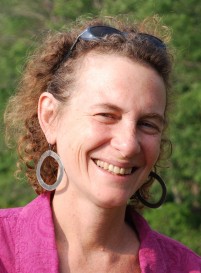
Donna Nevel

Donna Nevel

For many of us who are Jewish activists in this work for justice, we begin with our own stories as a foundation from which we make connections and build together with other communities. We do not view integrating who we are as Jews into our work for justice as a distraction or as an impediment. In fact, we all come to this work, not as empty vessels, but with rich histories and experiences.

Different entry points exist from which we can and do become involved with our collective work as Jews standing in solidarity with Palestinians. Jews who choose to work for justice in a specifically Jewish framework (like, for example, as part of Jewish Voice for Peace) do so for a variety of reasons, including 1) as a political or strategic response (e.g., challenging Israel’s claim that it speaks and acts in the name of the Jewish people and wanting to challenge the highly funded, organized Jewish establishment and lobby in the US); 2) because they feel inspired by Jewish traditions of social justice or are deeply connected culturally or religiously, which is a manifestation of the identity they want to bring to this work; or 3) because it feels like the most genuine way to play a role in this movement. For some, more than one of these often intersecting (or other) points of entry and engagement, are true.

For many of us, working in Jewish organizations sometimes also includes directing our work within the mainstream Jewish community (for example, holding programs on BDS within Jewish institutions or, as the Open Hillel campaign has done, challenging Hillel’s exclusion of groups that support BDS). This work is by no means what everyone chooses to do. But we believe making room, as part of our solidarity work, to work within those spaces–and to push to open up access for pro-Palestine organizing–can be a potentially valuable component of making change that, for example, breaks the normalization of a pro-Israel politics and encourages resistance to US foreign policy on Israel and Palestine.

An important question raised about Jewish-identified work for justice and the way it’s played out relates to the potential dangers of “exceptionalizing” the Jewish people. The notions of being a chosen people, or Jews having a particular premium on social justice, are often accepted as a given or as part of our historic legacy. We agree that it’s essential to strongly challenge these notions of exceptionalism. But we also believe that exceptionalizing one’s community is not the same as, and should not be conflated with, valuing one’s culture and identity and that which one most admires and respects from within one’s history. Caring about one’s community is not the same as privileging it. As Joseph Nevel (Donna’s father) often said, “Feel proud of, and connected to who you are, but never ever think you’re better than another human being or community.”

Another concern that comes up in relation to Jews organizing in solidarity spaces is how to address issues that arise when Jewish allies, even inadvertently, try to take over movement spaces to process emotional and social realities they face when beginning to align themselves politically with justice for Palestine. As part of our solidarity work, we believe one of the values of having some separate, intentional spaces amongst Jews who are unlearning years of what they have been taught and undergoing a process of conscientization is to offer support that both strengthens our broader organizing and doesn’t try to turn Palestine solidarity spaces into support groups for Jewish activists.

Finally, in all this work, we are committed, in how we act, to reflecting the world as we want it to be. We believe deeply—even as we challenge one another in critical and often difficult ways—that we must be kind and open to there being multiple entry points into, and points of engagement with this collective work. We must also not neglect to address head-on the impact and consequences of the oppression and exclusion and various relationships to privilege that exist amongst different Jewish communities, including in social justice circles, on the basis of, for example, ethnicity, class, gender, and formal education.

We believe that those of us who are Jewish participating in this movement need to be both rigorous and generous so as not to limit possibilities for meaningful solidarity work for justice, limit the humanness of our political work, limit the endless connections we can make. We can build, for example, from the kinds of liberatory and transformative processes Paolo Freire–“reflection and action upon the world in order to transform it”– writes about so powerfully.

We greatly believe that the focus is and must be about justice for Palestine and that this work has many dimensions to it. We hope that some of these questions and reflections might resonate with others and can help deepen and strengthen our thinking and actions as we participate in movements for justice.

Elisha Baskin, an activist and scholar, and Donna Nevel, a community psychologist and educator whose work is rooted in Participatory Action Research (PAR) and popular education, have had both similar and different entry points and relationships to this work. Elisha is an Israeli citizen who feels that Israel has hijacked her Judaism. She was never able to be comfortably Jewish in Israel and to participate in Jewish ritual because of the deep conflation of Jewish practice and Zionism/nationalism/patriotism/militarism and other oppressions. In the U.S., she feels able to reclaim her Jewish identity, which JVP and other radical Jewish circles have supported and helped make possible and which she believes strengthens her work for justice and enriches her life as a whole. Donna is an American Jew who participates in Jewish groups as part of her work for justice in Palestine because she thinks it is a meaningful way for her to be an intentional and accountable ally and because it feels true to who she is. She also wants to be part of groups challenging the grip that Israel and the Jewish establishment have on the Jewish community’s politics.

http://mondoweiss.net/2013/05/thoughts-committed-palestine.html

April 15, 2013

Jewish space plays host to spirited debate over whether Israel is a democracy

by Alex Kane  April 5, 2013 

Panel

From the left: Kathleen Peratis; Marilyn Kleinberg Neimark; Lizzy Ratner; Rebecca Vilkomerson and J.J. Goldberg

The back-and-forth over the question of Israeli democracy was aired in a Jewish space: Beit Simchat Torah, a progressive synagogue that caters to lesbian and gay Jews. All of the panelists were Jews, and the discussion was organized by progressive Jewish activists and moderated by Lizzy Ratner, a New York-based journalist  read the article on Mondoweiss

CAN ISRAEL BE JEWISH AND DEMOCRATIC part 1

April 15, 2013

Is Israel—or can it be—a democracy?

Is there—or can there be—equality in Israel?

Can a Jewish state be democratic?

Jewish Perspectives

April 4, 2013

Last year, at two panels on Jewish Responses to Boycott, Divestment, and Sanctions (BDS), the questions above were among those that people asked. We are interested in continuing this discussion in the Jewish community and more broadly. This panel will reflect a range of perspectives among members of the Jewish community—all by people committed to peace and justice in Israel/Palestine. Our goal is to share different Jewish perspectives, including those often silenced within the Jewish community, and to move this discussion beyond the Jewish community itself.

Cosponsors of this program are individuals with different perspectives on these questions, but all strongly defend an open exchange of views on issues of concern to our community and to people of conscience everywhere: Anita Altman, Elisheva Goldberg, Adam Horowitz, Rabbi David Ingber, Melanie Kaye/Kantrowitz, Alice Kessler-Harris, Rabbi Sharon Kleinbaum, Hannah Mermelstein, Donna Nevel, Alicia Ostriker, Letty Cottin Pogrebin, Michael Ratner, MJ Rosenberg, James Schamus, Dorothy Zellner.

MODERATOR:  Lizzy Ratner, Journalist; co-editor, “The Goldstone Report: The Legacy of the Landmark Investigation of the Gaza Conflict”

PANELISTS: Kathleen Peratis, Partner Outten & Golden LLP focusing on employment law; cochair Middle East North Africa advisory committee Human Rights Watch; board member Americans for Peace Now

Rebecca Vilkomerson, Executive director, Jewish Voice for Peace

JJ Goldberg, currently editor-at-large of the Jewish Daily Forward, formerly editor in chief, author of “Jewish Power: Inside the American Jewish Establishment”

Marilyn Kleinberg Neimark, Co-host for the past 18 years of “Beyond the Pale,” a program of progressive Jewish politics & culture on WBAI radio.

Can Israel be Jewish and Democratic? part 2

April 15, 2013

Panel discussion at Congregation Beit Simchat Torah April 4, 2013

Panel and discussion on “Jewish Perspectives: Is Israel—or can it be—a democracy? Is there—or can there be—equality in Israel? Can a Jewish state be democratic?”

Local press on “Is Israel a Democracy?” panel

March 20, 2013

Congregation Ansche Chesed, a prominent Conservative synagogue on Manhattan’s Upper West Side, prides itself on being a “diverse community” that offers its members a “rich array of programming.” But when its leader, Rabbi Jeremy Kalmanofsky, learned that the synagogue had agreed to serve as the venue for a panel on Israel, he attempted to cancel the event lest it lead to a discussion of BDS.

http://www.thedailybeast.com/articles/2013/03/11/fear-of-bds-spreads-to-ansche-chesed.html


The organizers wound up finding an alternate venue. Rabbi Sharon Kleinbaum, spiritual leader of CBST, had been a co-sponsor of the panel when it was scheduled to take place at Ansche Chesed. She offered to host the event at her synagogue, which is located on the far West Side.

“I am disturbed by the trend in the Jewish community to censor discussions about Israel and Palestine,” Kleinbaum said. “I feel like it’s my moral responsibility to make sure this burning issue that’s facing us as a Jewish people gets a complete debate and discussion.”

http://forward.com/articles/172879/controversial-panel-on-israel-moved-from-ansche-ch/


Below is the letter from the organizers addressed “to the Jewish Community: A Synagogue Tried to Shut Us Down.”

We are a group of progressive Jews deeply involved in Israel/Palestine and immersed in issues of democracy and justice. We are writing to advise you of a blatant attempt last week by leaders of a prominent New York synagogue to shut down a panel discussion on the subject “Israel-Equality-Democracy.”

http://mondoweiss.net/2013/03/synagogue-banishes-israel.html

Is Israel a democracy?

March 13, 2013

PLEASE NOTE VENUE CHANGE!

Jewish Perspectives:
Is Israel—or can it be—a democracy?
Is there—or can there be—equality in Israel? Can a Jewish state be democratic?

COSPONSORS

Cosponsors of this program are individuals with different perspectives on these questions, but all strongly defend an open exchange of views on issues of concern to our community and to people of conscience everywhere: Anita Altman, Elisheva Goldberg, Adam Horowitz, Rabbi David Ingber, Melanie Kaye/Kantrowitz, Alice Kessler-Harris, Rabbi Sharon Kleinbaum, Hannah Mermelstein, Donna Nevel, Alicia Ostriker, Letty Cottin Pogrebin, Michael Ratner, MJ Rosenberg, James Schamus, Dorothy Zellner.

DETAILS

Thursday, April 4, 2013 //// 7 – 9 PM
We are so pleased that the event is being hosted by
Congregation Beit Simchat Torah
57 Bethune Street (between Washington St. and West Side Highway) A, C, E to 14th St //// L to Eighth Avenue

PANELISTS

JJ Goldberg //// Editor-at-large of the Jewish Daily Forward, formerly editor in chief for 7 years / author of “Jewish Power: Inside the American Jewish Establishment”

Marilyn Kleinberg Neimark //// Co-host for the past 18 years of “Beyond the Pale,” a program of progressive Jewish politics & culture on WBAI radio

Kathleen Peratis //// Partner Outten & Golden LLP focusing on employment law; co- chair Middle East North Africa advisory committee Human Rights Watch; board member Americans for Peace Now

Rebecca Vilkomerson //// Executive director, Jewish Voice for Peace
Moderator by Lizzy Ratner //// Journalist; co-editor, “The Goldstone Report: The Legacy of

the Landmark Investigation of the Gaza Conflict”

Last year, at two panels on Jewish Responses to Boycott, Divestment, and Sanctions (BDS), the questions above were among those that people asked. We are interested in continuing this discussion in the Jewish community and more broadly. This panel will reflect a range of perspectives among members of the Jewish community—all by people committed to peace and justice in Israel/Palestine. Our goal is to share different Jewish perspectives, including those often silenced within the Jewish community, and to move this discussion beyond the Jewish community itself.

We look forward to engaged and respectful discussion! All are welcome.


Brooklyn College Stood Firm

February 20, 2013

Butler and Barghouti

When it became clear that the college, the Mayor, and the New York Times were in support of  allowing the talk on BDS at Brooklyn College sponsored by Students for Justice in Palestine,  the politicians backed off and the discussion by Omar Barghouti and Judith Butler took place.  Here are Butler’s remarks published on The Nation (http://www.thenation.com)

 Judith Butler‘s Remarks to Brooklyn College on BDS  

February 7, 2013

The principle of academic freedom is designed to make sure that powers outside the university, including government and corporations, are not able to control the curriculum or intervene in extra-mural speech. It not only bars such interventions, but it also protects those platforms in which we might be able to reflect together on the most difficult problems. You can judge for yourself whether or not my reasons for lending my support to this movement are good ones.

That is, after all, what academic debate is about. It is also what democratic debate is about, which suggests that open debate about difficult topics functions as a meeting point between democracy and the academy. Instead of asking right away whether we are for or against this movement, perhaps we can pause just long enough to find out what exactly this is, the Boycott, Divestment and Sanctions movement, and why it is so difficult to speak about this.

Read the full text herehttp://www.thenation.com/article/172752/judith-butlers-remarks-brooklyn-college-bds

Supporting free speech at Brooklyn College

February 20, 2013

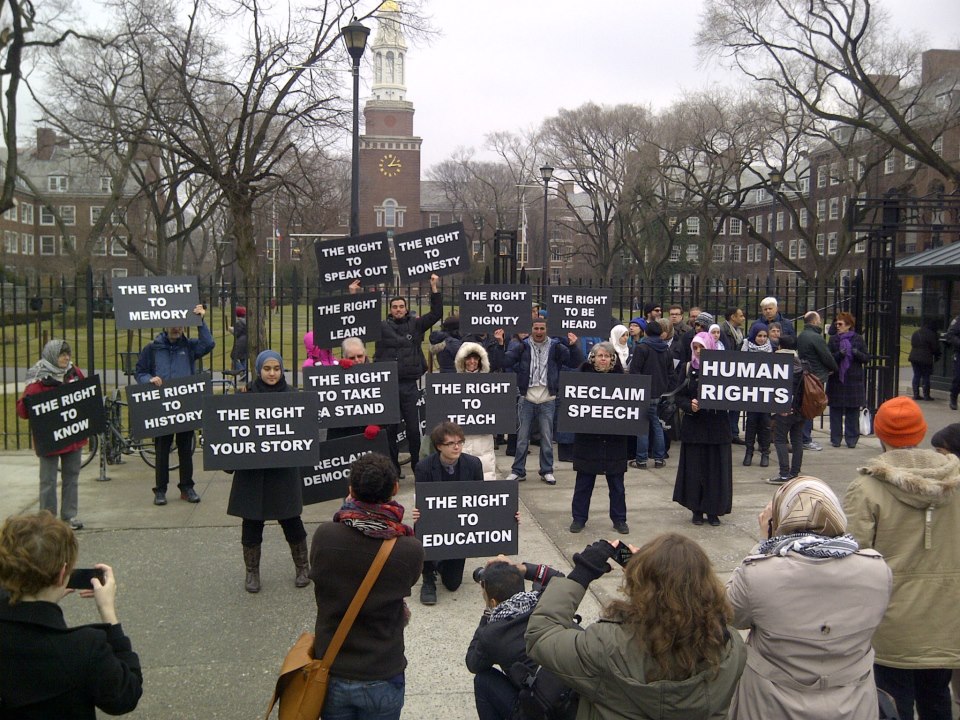
A talk about Boycott, Divestment, and Sanctions (BDS) on the campus of Brooklyn College with Omar Barghouti and Judith Butler scheduled for February 7 was attacked by elected officials and others. Donna Nevel of Jews Say No! spoke at a press conference at the college on February 5.

Brooklyn College

I am Donna Nevel from Jewish Voice for Peace and Jews Say No! I am pleased to be here today to have the opportunity to speak out in support of Students for Justice in Palestine and all those at Brooklyn College and across the city concerned with ensuring that bullying and intimidation do not succeed in denying students and others the right to engage in critical examination and inquiry of important political ideas.

What we have seen happening here is yet another example of an attempt to suppress and vilify voices critical of Israel and Israeli government policies, a pattern that has become far too common in this city and nation-wide.

It’s bad enough that Alan Dershowitz and Dov Hikind have engaged in a smear campaign. We’ve come to expect that. But city council members who threaten to take away city funding merely because they disagree with the views expressed on a college campus should be ashamed of themselves and should be held accountable for trying to interfere in this way. And they must not prevail.

About the topic that has become so controversial and caused so much condemnation- It needs to be made clear that Boycott, Divestment, and Sanctions (BDS) is a non- violent response to the Israeli government’s violation of basic principles of human rights and international law. It is, in my view, those violations that should be condemned, not strategies such as BDS that are designed to put an end to those violations, and the injustices that they inflict on the Palestinian people. In the eight years since hundreds of Palestinian civil society organizations called for BDS — similar to the boycott/ divestment movement against South African apartheid — it has garnered strong international support. And for good reason. It is a common ploy to suggest that criticism of Israel is anti- Semitic. It is a ploy that trivializes the long and ugly history of anti-Semitism.

I want to mention that there were over 2,000 signatories to the Jewish Voice for Peace petition supporting the event and the President’s decision not to capitulate to those pressuring the university.

We are heartened that Brooklyn College is resisting the calls to abandon what higher education should be—a place for learning, and challenging, and critical thinking, where students are pushed to imagine and to envision how they can participate in making the world a better place for all peoples and for all communities.

With the pervasiveness of Islamophobia and anti-Arab racism and the targeting of communities of color in NYC, and with the attempt to silence those whose views on Israel do not mirror Israeli government or US policy, colleges standing strong against political opportunism and attempted coercion are more important than ever.

jaic-january_panel.jpg

January 8, 2013