Archive for the ‘articles’ Category

Support for Israel in the U.S. Jewish Community Continues to Erode

November 19, 2014

by Marilyn Kleinberg Neimark and Donna Nevel

jvp_on_stairs

Since the inception of the Zionist movement at the end of the 19th century right on up to today, there have always been Jews who took issue with particular aspects of –or even the very idea of– a Jewish nation-state in historic Palestine. The recent Israeli bombardment of and incursion into Gaza – what Israel called “Operation Protective Edge” – saw a new surge in Jewish-American opposition to Israeli practices and policies. While this activism stands on a many-layered foundation of more than half-a-century of organizing in the US – especially from 1967 forward –it reveals some new and heartening trends.

These developments can be seen in stepped-up on-the-ground activism, the widening scope of the discourse around what is at issue, and even in the increasing cracks in the once-solid attitudes of liberal Zionists. All of these factors emerge, of course, within a wider U.S. (and indeed, international) movement and context.  Read more 

What Ella Baker Taught Us About Ferguson And Gaza by Dorothy Zellner

September 4, 2014

Tikkun August 26, 2014


Ella Baker

In late June I traveled to Jackson, Mississippi, for the fiftieth anniversary of the 1964 Freedom Summer, where some 1,000 of us met after decades and celebrated the heroism of young volunteers and local African Americans who struggled and died for the right to vote. We talked about the way forward to eradicate still-existing racism in the country and we called the names of all our dead, a list of men, women and children whom the nation has never mourned.

As a recruiter for Freedom Summer and staff member of the Student Nonviolent Coordinating Committee (SNCC) fifty years ago, I had the honor of being approached by several volunteers whom I had helped select and who told me that going to Mississippi that faraway summer had forever changed their lives.

What propelled me into the civil rights movement in the first place as a young woman was the exhortation I had received from my secular Jewish progressive parents: that it is unethical to stand idly by while people are oppressed and suffering. What SNCC taught me was that I needed to act in my own community. It took me some time to put all of this together but finally, eleven years ago, I went to Israel, the West Bank, and Gaza for the first time. Based on what I saw with my own eyes and the anguish I felt in my own heart I became a Jewish activist against Israeli governmental policies of injustice and inequality.

It was only a few days after I got home from Mississippi this past June that a new assault on Gaza began, the third in seven years. I had already seen in my two visits to Gaza what the siege was like for Palestinians living in Gaza.

At the time of this writing, the death toll is horrifying: a staggering total of 2,114 Palestinians, of whom 506 are children, and 10,529 wounded. Four Israeli civilians and sixty-four soldiers have died. Can we even begin to imagine the horror all these families are experiencing? Despite several short ceasefires, “Operation Project Edge” continues and rockets continue to be fired.

And now in the midst of an already terrible summer, Ferguson happens. Another incident of violent racism in our country.

For me, the events in Ferguson and the events halfway around the world are linked. I am not saying they are the same. I am not even saying there are many parallels, but there are some similar lessons.

In 1969, Ella Baker, SNCC’s great mentor, pointed us in the direction of meaningful action when she said, “In order for us as poor and oppressed people to become a part of a society that is meaningful, the system under which we now exist has to be radically changed.” This means that we are going to have to learn to think in radical terms. I use the term radical in its original meaning – getting down to and understanding the root cause. Baker continued, “It means facing a system that does not lend itself to your needs and devising means by which you change that system.”

This is the crux.

We have not yet managed to understand the “root cause” of deaths like Michael Brown’s in our country. This is the work still ahead of us. I understand Ferguson to be one more example of the basic inequality that still exists in the U.S., where communities of color are still unrepresented in their police departments or their city governments and live amidst poverty and neglect.

Yes, certain aspects have changed in the South; these days you don’t take your life in your hands if you travel in an automobile in an interracial group, and you are unlikely to be arrested if, as an African American, you try to eat in a restaurant, and you did, up until recently when voter ID laws and other impediments were invented, have the right to register to vote. But by all other measures, specifically education, housing, jobs, poverty, and an unequal criminal justice system that retains more than two million people, mostly Black and Brown, in prison, we are a racist society. South and North, East and West. We have not attacked the “root cause”: a basically flawed economic and social system that sanctions exploitation and needs racism and division to survive.

And what, in my opinion, is the “root cause” of all the death and destruction in the Middle East? It isn’t Hamas, it isn’t who sent the rockets first, who killed which teenager first, and it isn’t who broke which ceasefire first. The underlying cause flows from the injustice of one group controlling the lives and future of another group. As long as Israel occupies Palestine, and as long as Palestinians resist (which, according to International human rights law, they have the right to do), confrontations and death will result. The root cause is the occupation, which itself flows from the previous dispossession of Palestinians from the land they inhabited for generations.

Though the situations are thousands of miles away from each other in different languages and different cultures, somehow or other we will all have to follow Miss Baker’s teaching: to look deeply, beyond the horror of the moment and our particular loyalties.

Because once we understand that there are root causes, we will be able to make effective efforts to change them.

Dorothy Zellner is one of the founders of Jews Say No!, serves on the board of the Friends of the Jenin Freedom Theater and is a member and volunteer with Jewish Voice for Peace. She was a staff member of the Student Nonviolent Coordinating Committee (SNCC staff) from 1962 to 1967.


“But Hamas…” Donna Nevel in Tikkun

September 4, 2014

“But Hamas…” by: Donna Nevel on August 14th, 2014 |

In conversations about Gaza, I have heard many thoughtful people in the Jewish community lament the loss of Palestinian lives in Gaza but then say, “But Hamas…,” as if that were the heart of the problem. I’d like to suggest that, when we have these conversations about Hamas and Israel’s current bombing campaign, we begin with the necessary context and historical perspective.

Re: The Nakba

1. To create the Jewish state, the Zionist movement destroyed more than 400 Palestinians villages and expelled 700,000 Palestinians from their homes and land. Palestinians who remained in what became Israel were relegated to second-class citizenship, had much of their property confiscated, and, to this day, have fewer rights than Jewish Israeli citizens.

Re: The 1967 Occupation

2. In 1967, Israel occupied the West Bank, Gaza, and East Jerusalem and still occupies them until this day.

Re: Settlement expansion; the apartheid wall; and the siege of Gaza

3. Over the past 47 years of occupation, Israel has illegally confiscated more and more Palestinian land; built an apartheid wall; systematically denied Palestinians basic human and civil rights and engaged in state-sponsored violence; and forced the Palestinians in Gaza to live in appalling conditions that make it increasingly impossible to survive. Israel’s latest bombing campaign, Operation Protective Edge, has killed over 1,900 Palestinians, at least 450 of whom are children, and has displaced hundreds of thousands more.

If those of us in the Jewish community who are committed to justice begin from these facts, I think it would become clearer – regardless of who the Palestinian leadership is – that the underlying problem really is the denial of freedom and basic human rights to millions of people, for decades. And, as a community, it should also become clearer where priorities need to be in order to have any integrity on this issue: addressing the Nakba of 1948 and the responsibility for the Nakba head-on – including the right of return for refugees; ending the occupation; ending the siege on Gaza; and recognizing the right to full equality for Palestinian citizens of Israel.

Donna Nevel, a community psychologist, educator, is a long-time organizer for peace and justice in Palestine/Israel. More recently, she is a founding member of Jews Say No!, on the board of Jewish Voice for Peace, and on the coordinating committee of the Nakba Education Project-US.

The Heart of the Problem With Israel: The Mass Expulsion of the Palestinian People

July 20, 2014

The Heart of the Problem With Israel: The Mass Expulsion of the Palestinian People

By Donna Nevel

July 18, 2014

As Israeli government violence against the Palestinians in Gaza intensifies (the latest news being an aggressive ground invasion), I saw a discussion on-line about whether Israel has become more brutal or the brutality has simply become more visible to the public.

I remembered listening to Benjamin Netanyahu when he was at MIT in the 1970’s. He called himself Bibi Nitai and said he was in self-exile until the Labor Party, which he despised, was out of power. He spoke contemptuously about Arabs, and predicted he would be the leader of Israel someday and would protect the Jewish state in the way it deserved. The immediate response many of us had was: “Heaven help us all if he ever gets into power in Israel.”

I also remember the many Israeli leaders I met in the 1970’s from Labor and Mapam and from smaller parties on the “Zionist left” who seemed kind and caring and markedly different from Benjamin Netanyahu—and in many ways they were, not just in their political rhetoric (they all said they were socialists) but as human beings, or so it seemed. But when I finally dug a little deeper and read my history, I learned how they, too, were participants—in fact, often leaders—in the plan to drive the Palestinians out of their homes and off their land. Nothing very kind or caring about that, to say the least.

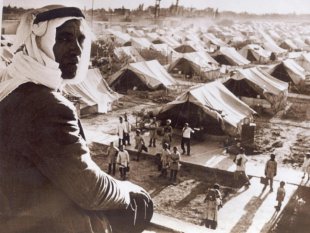
The bottom line: Israel was created based on the expulsion of over 700,000 Palestinians from their land and from their homes (what Palestinians call the Nakba, the catastrophe). This is the heart of the problem.

man_see_school_nakba

In some circles, particularly among “progressive” Zionists, the terrible injustice done to the Palestinians is acknowledged, but as awful as the Nakba was, they say, it was what had to be done to create and ensure the security of the Jewish state. (The most recent proponent of this position is Israeli writer Avi Shavit.) It was a terrible price that had to be paid, he and others concede. To be clear, the price was paid by the Palestinians—that is, the killing and expulsion of Palestinians for the sake of Jewish safety. And quite simply, the only way you can think that – that you can excuse the Nakba– is to believe that Jewish lives matter more than Palestinian lives.

And isn’t that what we are seeing today? If Jewish lives matter more than Palestinian lives—if, as the argument goes, the Nakba had to happen so that Jews could be “safe”—doesn’t the brutal violence we see so casually inflicted on the people of Gaza by the Israeli government follow from, in fact, isn’t it embedded in, that history? (And it’s ironic to note that large numbers of the Palestinians in Gaza are from families that fled there during the Nakba in 1948 as refugees from cities and villages in what became Israel.)

That is why I believe those of us working in our own communities—in my case, the Jewish community—need to make sure everyone not only knows about the Nakba but understands that this is the heart of the issue. And that central to the achievement of the “Zionist dream” has been that Jewish lives matter more than Arab lives. That so much attention was paid in Israel to the three kidnapped Israeli boys, in contrast to the total contempt and disregard for the large numbers of Palestinian youth killed and languishing in Israeli prisons for the crime of being Palestinian, brings this point home.

Finally, our understanding of the Nakba cannot end there. We cannot use the acknowledgement of injustice to excuse ourselves from doing anything to end it. We have to take the next step—to think about solutions; to work to hold Israel accountable to basic principles of human rights and self-determination; to recognize the rights of those who have been expelled from their homes. Sometimes the problem is understood as beginning with “the occupation” of 1967, but the root cause goes back to the Nakba and the refusal to allow the return of the refugees in contradiction of UN general assembly resolution 194. In the Palestinian-led call for Boycott, Divestment, and Sanctions (BDS), which has reverberated across the globe, the principles are laid out clearly: 1. Ending the Israeli occupation and colonization of all Arab lands and dismantling the Wall;
 2. Recognizing the fundamental rights of the Arab-Palestinian citizens of Israel to full equality; and
 3. Respecting, protecting and promoting the rights of Palestinian refugees to return to their homes and properties as stipulated in UN resolution 194. That is what is needed to address the problem at its core.

http://www.alternet.org/world/heart-problem-israel-mass-expulsion-palestinian-people